 Published:
 Visits:
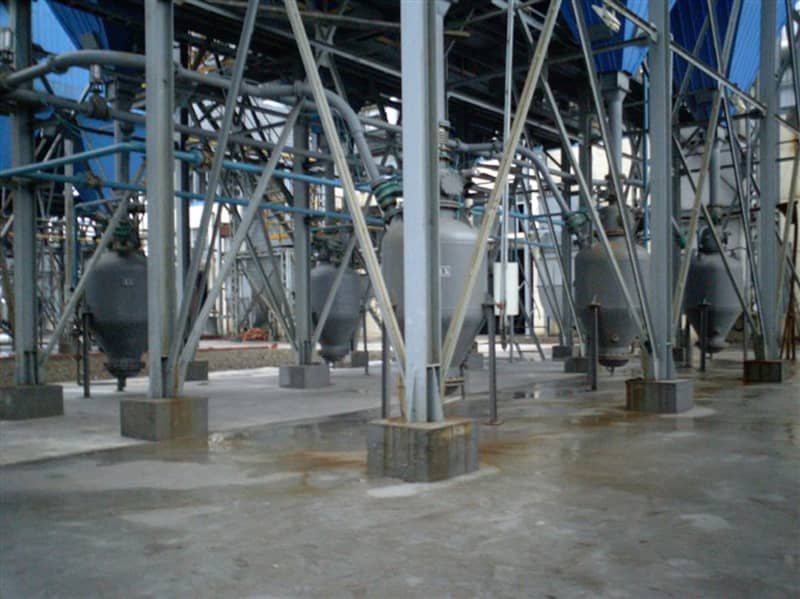
In modern building materials manufacturing, efficient and dust-free transfer of bulk powders like fly ash is crucial for reducing operational costs and maintaining clean workshops. This case study deeply analyzes a successful implementation by BIOP, featuring a fluidized dense phase pump pneumatic conveying system for a prominent building materials enterprise in Zhejiang, offering valuable insights for industrial plant upgrades.
The enterprise specializes in concrete products and building components, requiring daily stable transfer of bulk fly ash from storage silos to mixing equipment located 80 meters away. Previously, the company relied on traditional mechanical conveying methods (screw and bucket elevators), facing three major challenges:
Severe Dust Emissions: Open or semi-closed mechanical equipment caused heavy workshop dust pollution, failing green environmental standards.
High Equipment Wear & Energy Consumption: Heavy mechanical friction led to frequent maintenance and high comprehensive energy usage.
Material Loss: Spillage and residual buildup during transport directly increased raw material costs.
Considering the fine particle size, good flowability of fly ash, and the 80-meter conveying distance, BIOP’s engineering team customized a positive pressure dense phase pneumatic conveying pump system. Comprising the pump body, precision valves, pneumatic controls, and air drying units, the entire installation was executed within a two-week non-stop production window, ensuring zero disruption to existing operations.
Managed by an automated PLC closed-loop system, the pump’s working cycle is structured into four efficient stages:
Feeding Stage: Inlet valve opens; fly ash flows by gravity into the pump body.
Pressurization & Fluidization: Inlet valve seals tightly; compressed air injects via the fluidization base to blend material and air into a fluidized state.
Dense Phase Conveying: Outlet valve opens; material is propelled along pipelines in a high-concentration, low-velocity slug flow.
Line Purging: Clean compressed air thoroughly purges the pipeline to prevent any residue.
After one year of operation, actual performance metrics demonstrated significant cost-saving and efficiency gains:
| Evaluation Metric | Before Upgrade (Mechanical) | After Upgrade (BIOP Pump Conveying) |
| Workshop Environment | Heavy dust pollution | Fully sealed, clean & eco-friendly |
| Material Loss | Significant spillage & residue | Drastically reduced; ~5% annual fly ash saved |
| Energy Consumption | High motor loads, elevated usage | Approx. 15% overall energy savings |
| Maintenance Costs | Frequent wear and part replacements | No moving parts in contact; minimal valve/pipe checks |
| Production Efficiency | Conveying speed limitations | Daily output steadily increased by 8% |
Return on Investment (ROI): Initial investment for equipment and installation was approximately RMB 200,000. Through electricity savings, reduced material loss, and lower maintenance expenses, the enterprise recovered ~30% of costs within the first year, expecting a full payback within three years.
This case fully demonstrates the practical value of dense phase pumps across building materials, chemical, and mineral sectors. As automation grows, pneumatic systems are moving toward smart control (IoT sensors for real-time pressure and wear monitoring). BIOP recommends industrial users to:
Thoroughly evaluate physical properties such as moisture content, particle size, and angle of repose.
Equip systems with efficient air-drying units in humid environments to prevent pipeline caking.
Perform regular non-destructive testing on high-wear areas like bends.
Explore Related Equipment & Systems:
Check out the compatible >> Industrial Bulk Material Storage Silo System and upstream >> Full Automatic Loss-in-Weight Feeder.
Planning a powder handling upgrade? >> Contact our engineering team today for a customized solution.

 English
  Russian
  简体中文
简体中文